Still Life with Iris
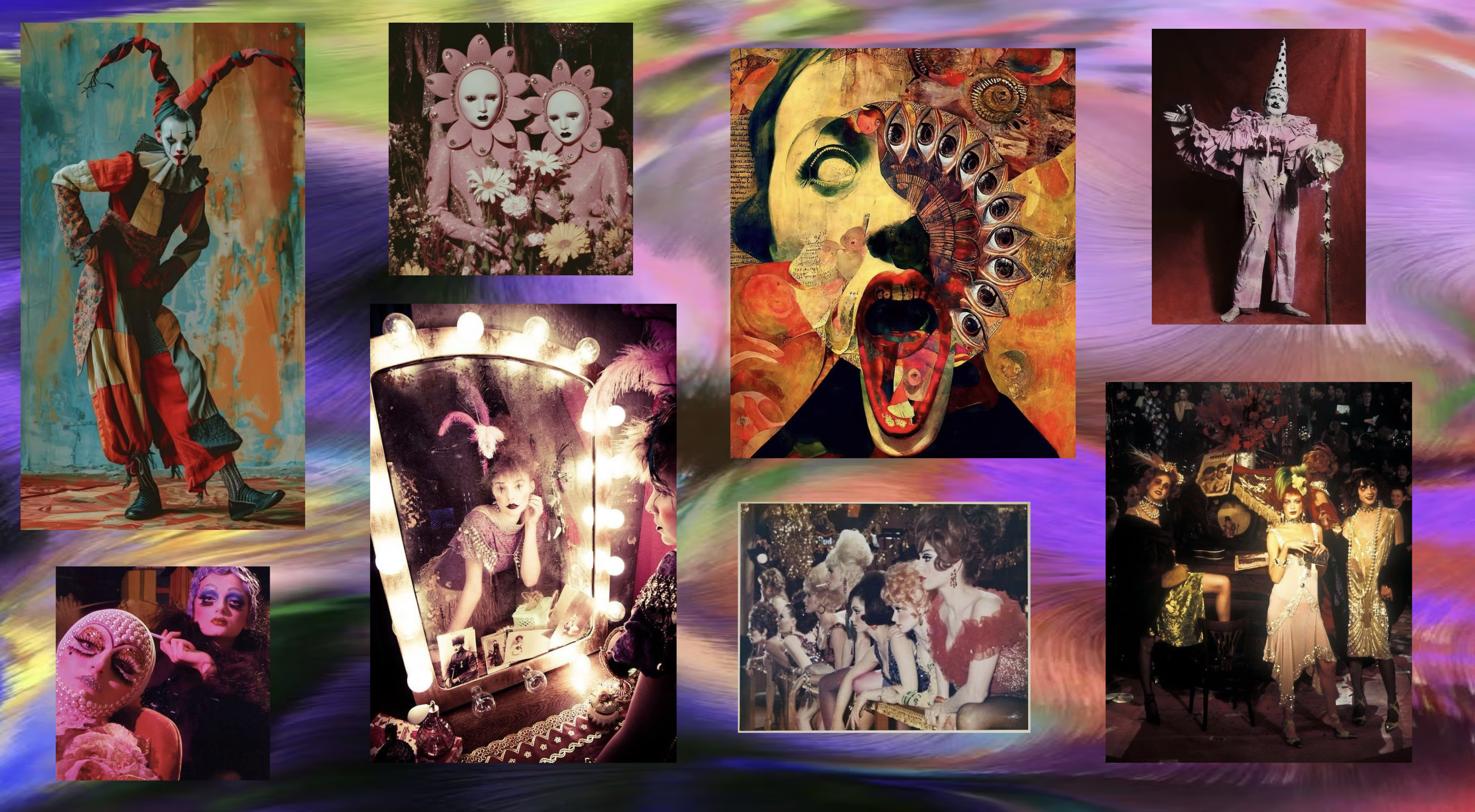
My concept for this production stemmed from the contrast between the remembered and the forgotten. I was interested in what it means to exist in a world where memory is lost. Without memory, what defines identity? I explored this question through color, creating distinct visual worlds that reflected memory, its absence, and its distortion. I imagined Nocturno as a warm English countryside home, while the world of the Goods was highly saturated and overstimulating, emphasizing the stark contrast between the two realities
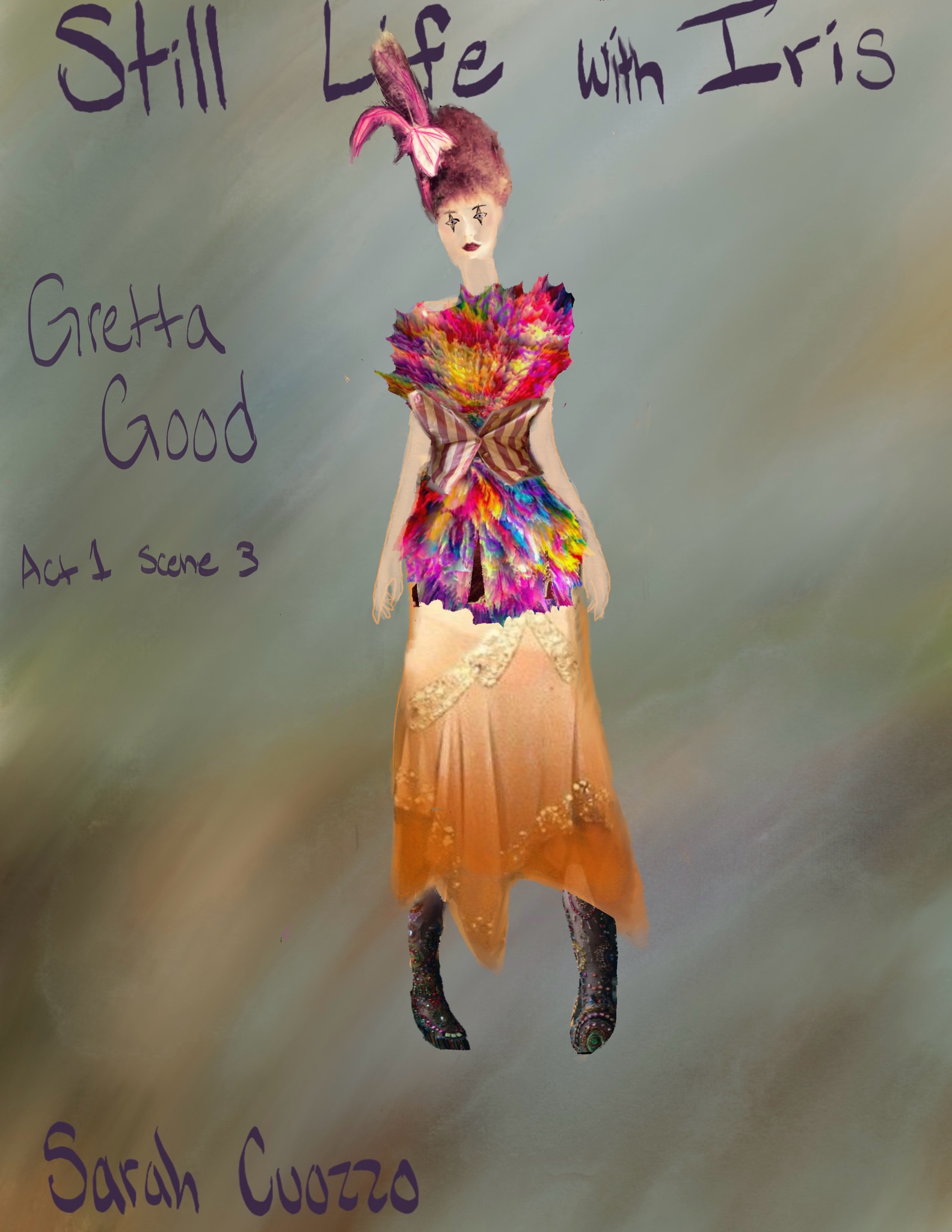
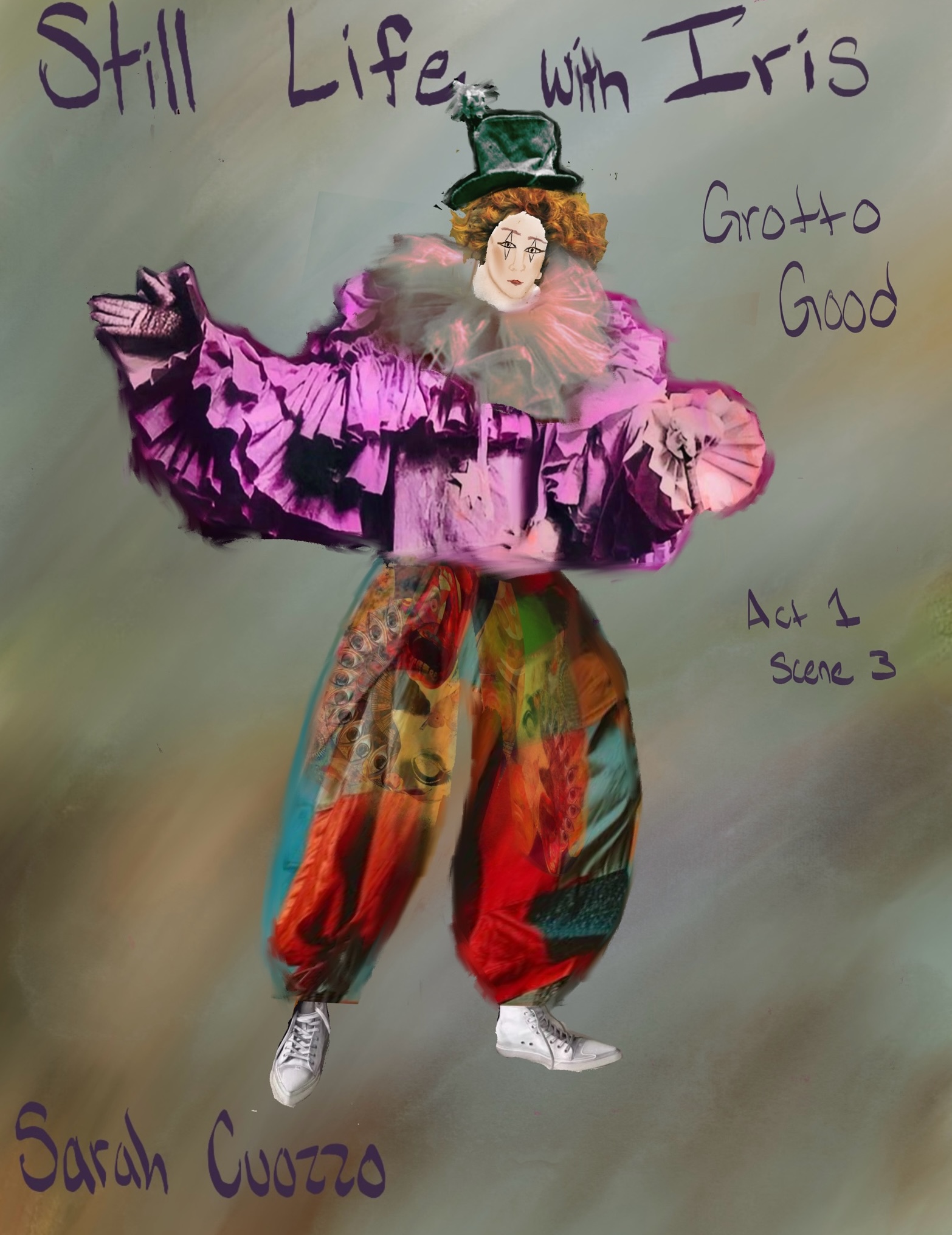
Gretta Good & Grotto Good
When designing the Goods, I approached them from a child’s perspective. This led me to the idea of clowns, figures created to entertain children yet often associated with something unsettling. I was drawn to that contradiction and used it as the foundation for the designs. Through highly saturated colors, exaggerated proportions, and contrasting textures, I wanted the Goods to feel visually overwhelming, creating a sense that something is not quite right. While each character differs in scale and silhouette, they are united by a shared excess of color and sensory overload.
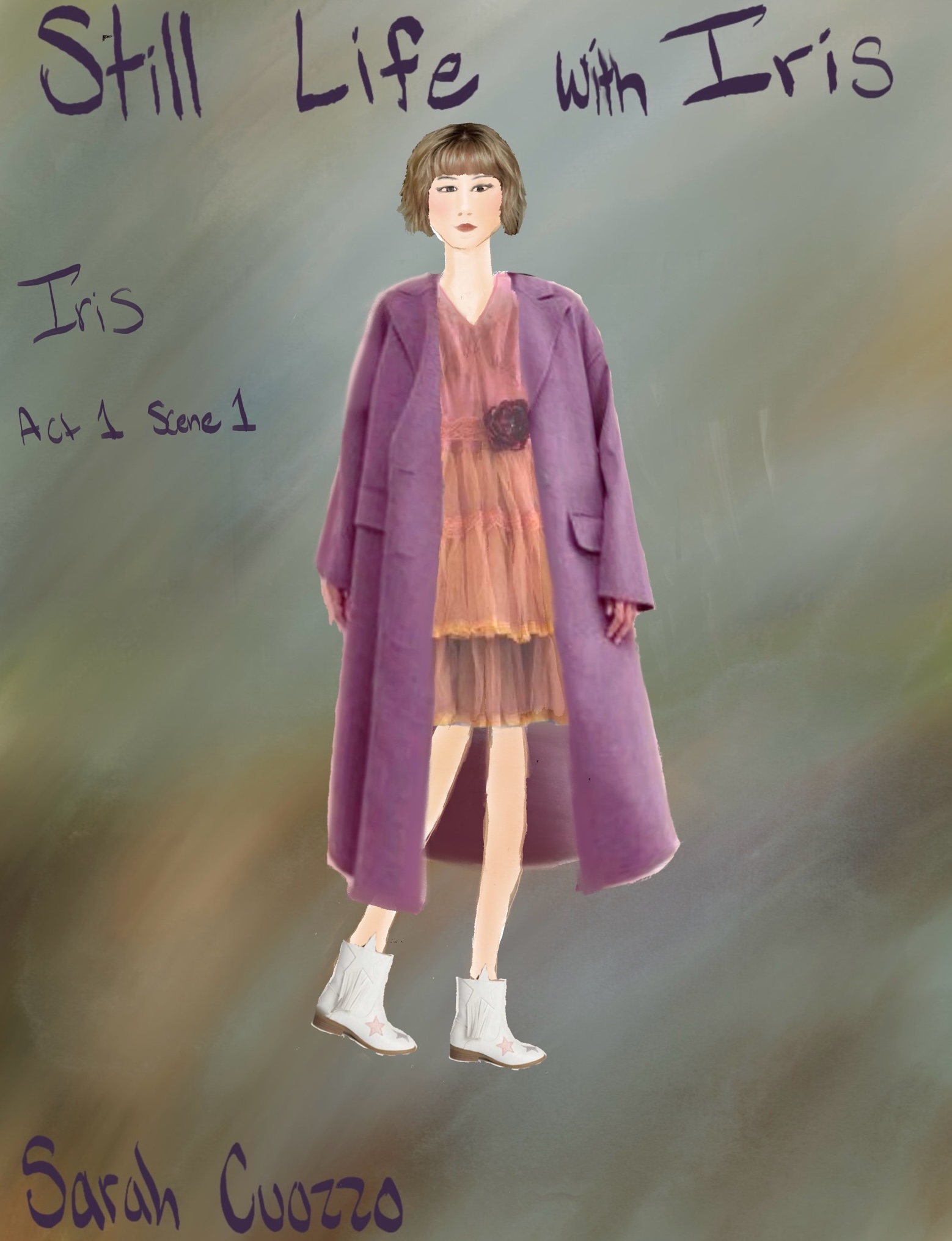
Iris
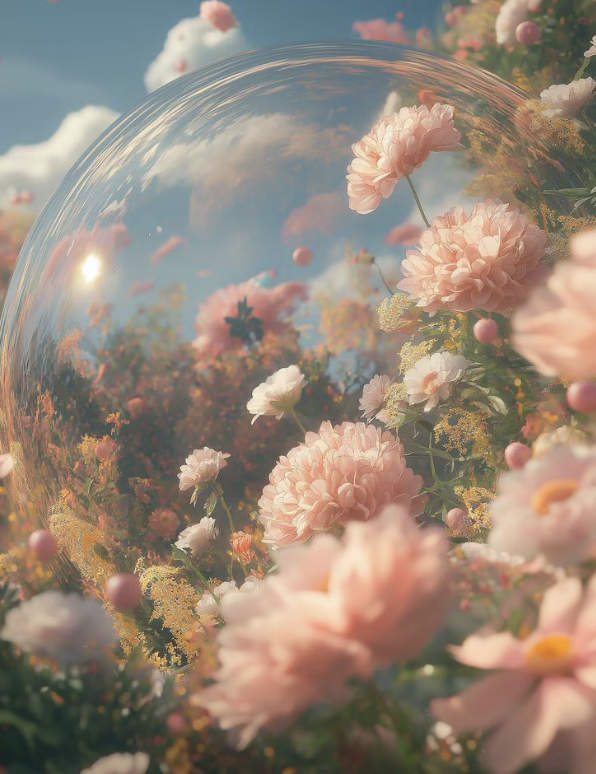
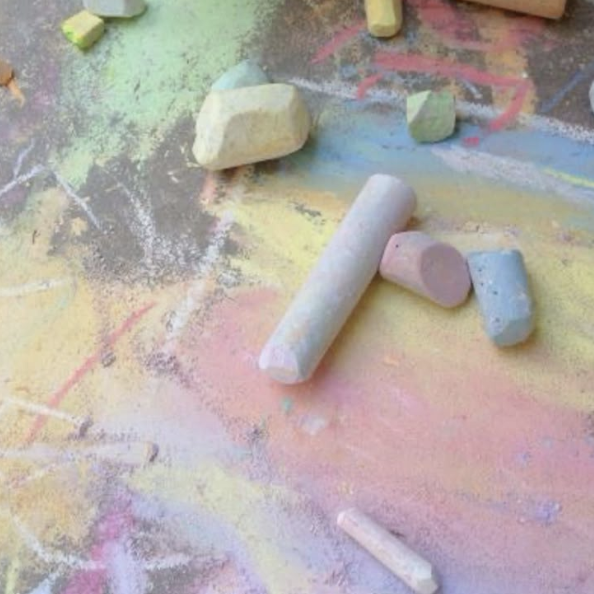
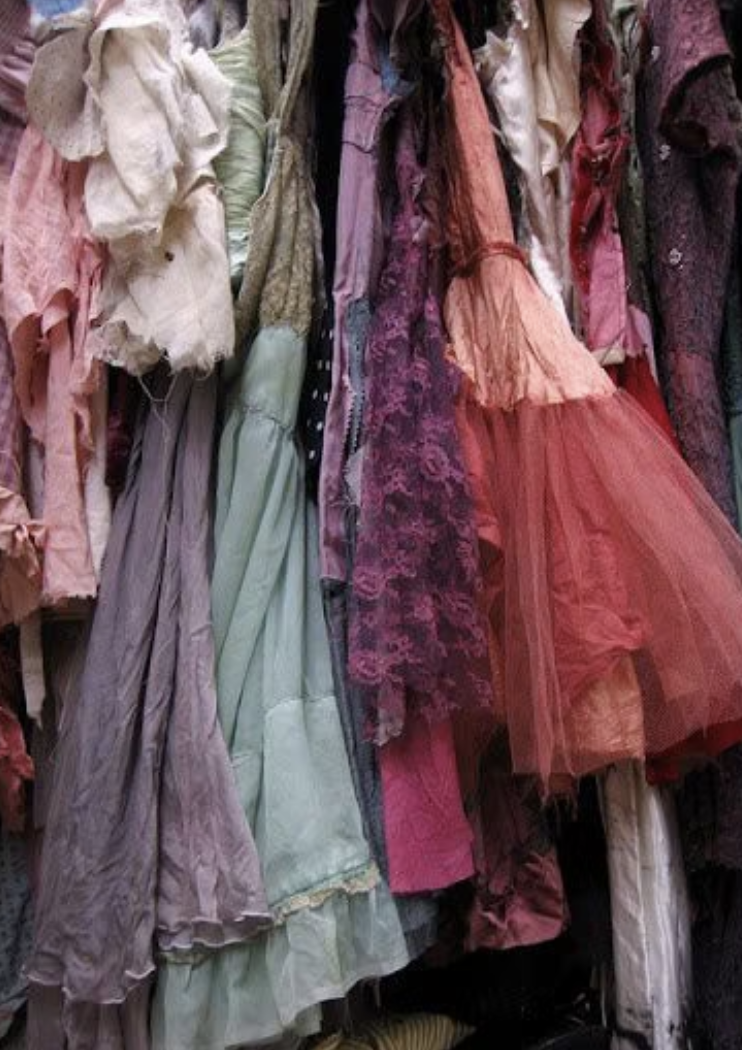
It was important to me that Iris embody a youthful, imaginative spirit. I was inspired by childhood dress-up and imagined her closet filled with colorful princess dresses, tulle, and airy fabrics. Her dress reflects that sense of playfulness through a cupcake silhouette and soft textures. I also chose a bright purple coat because of its significance within the story, helping reinforce the audience's connection to the character and her journey.
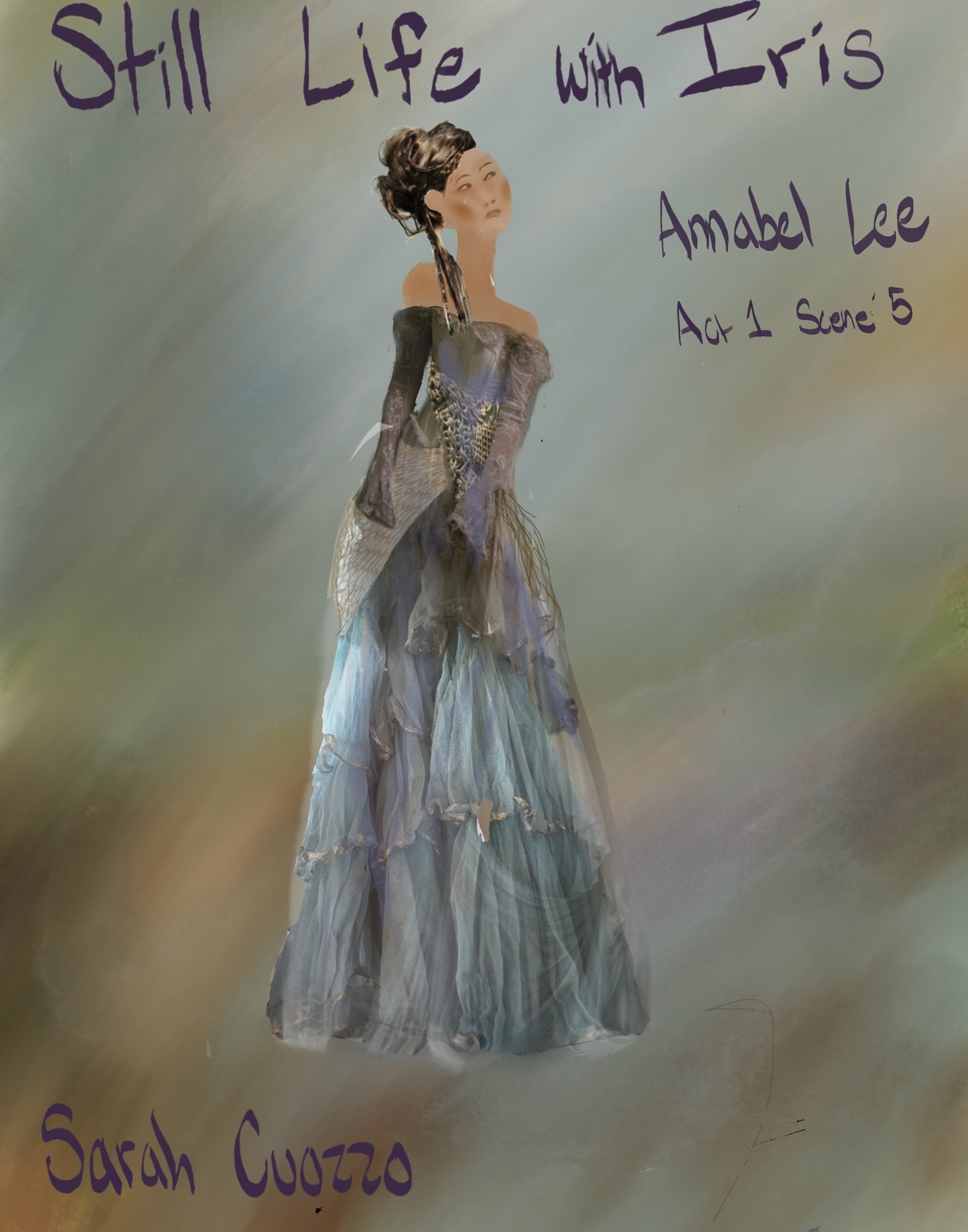
Annabel Lee
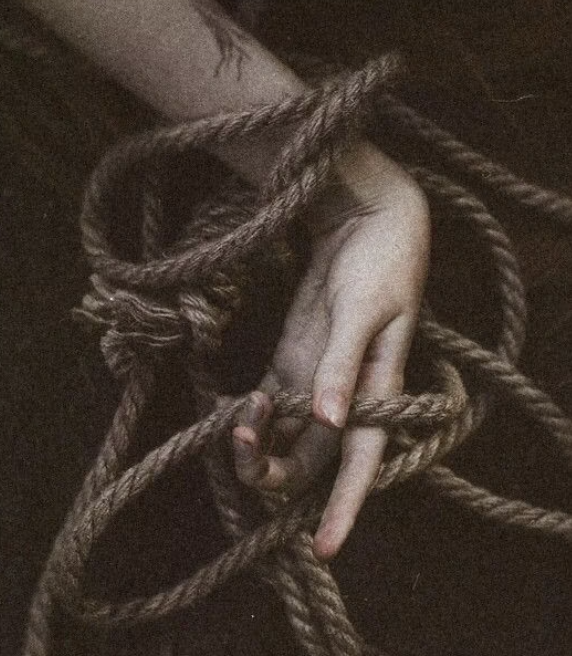
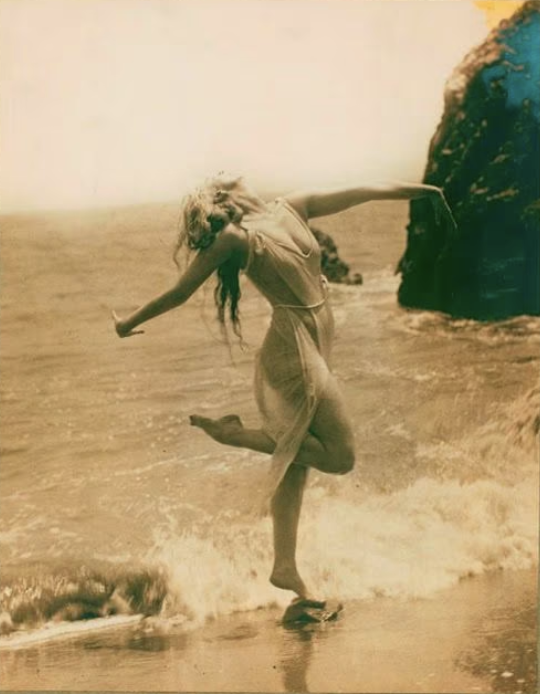
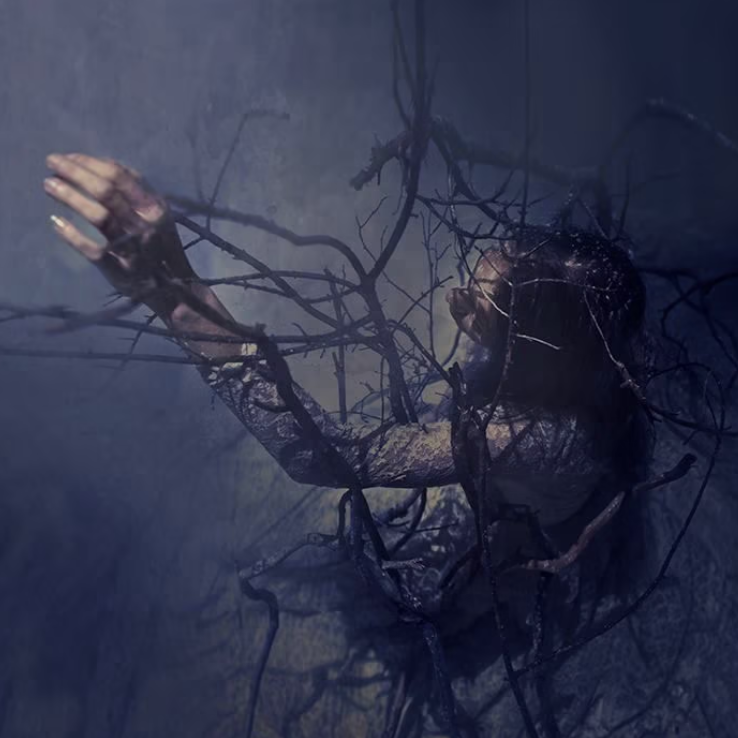
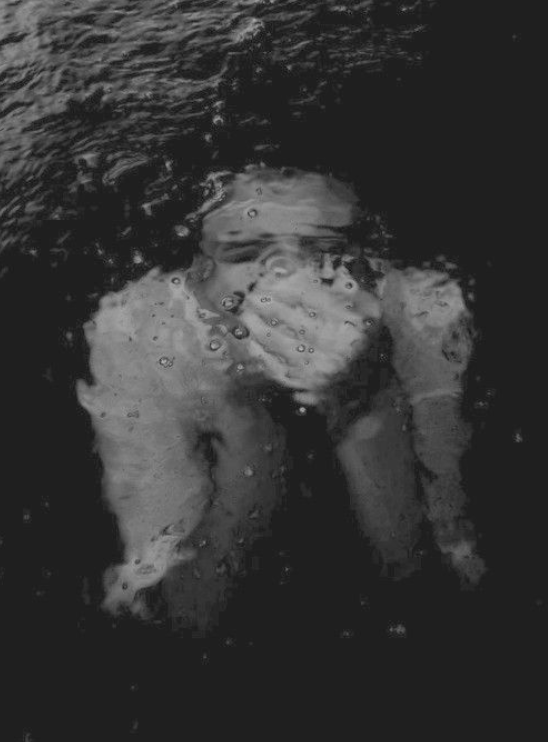
What interested me most about Annabel Lee was the tension between freedom and captivity. While the sea feels powerful and limitless, Annabel herself remains trapped by it. To represent this contrast, I used opposing textures and materials throughout her costume. Her flowing skirt suggests movement and freedom, while ropes and netting wrapped around her waist symbolize the forces that keep her entangled.